
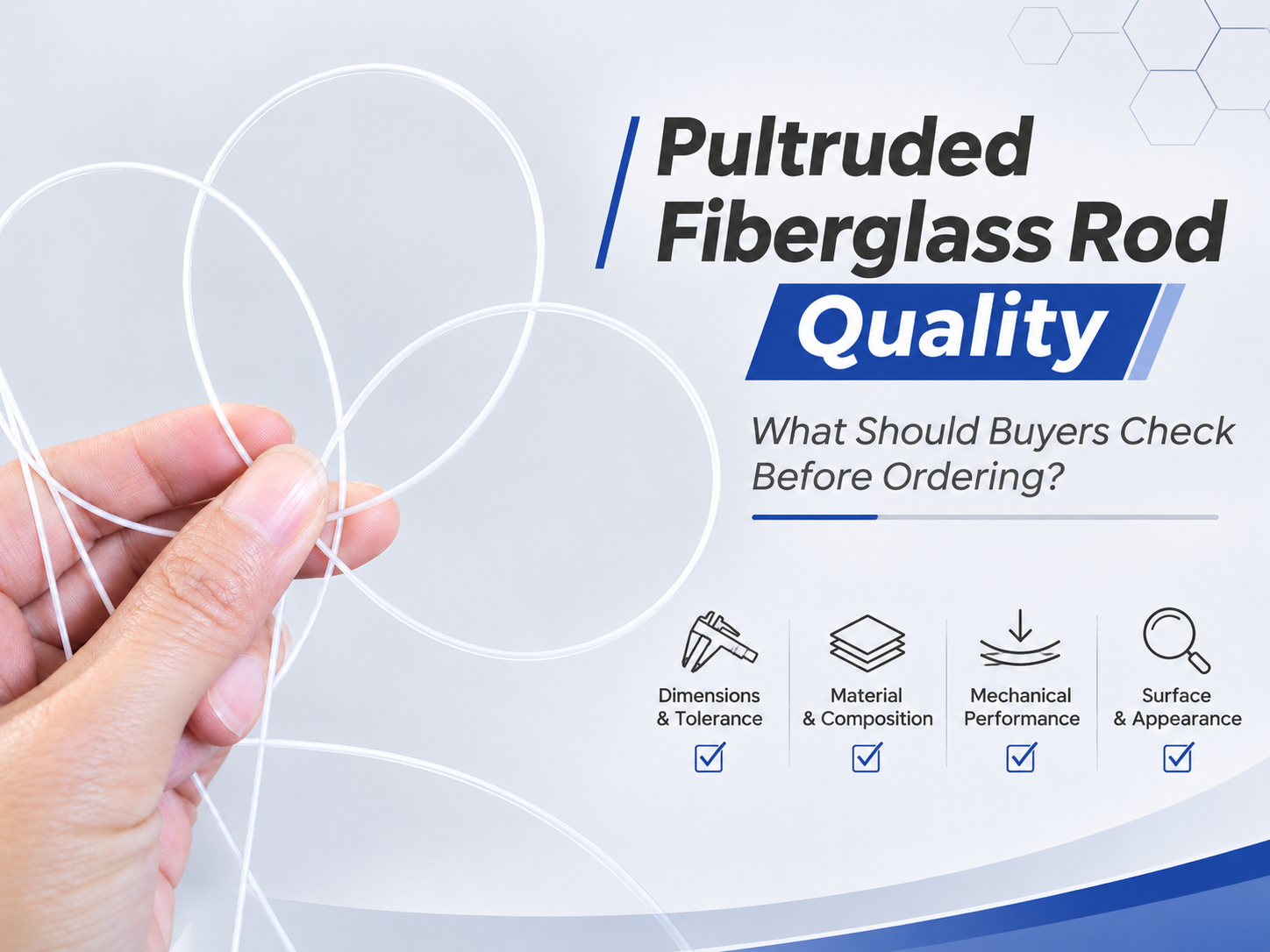
Pultruded Fiberglass Rod Quality: What Should Buyers Check Before Ordering?
A fiberglass rod can look fine on arrival and still cause problems during assembly.
Maybe a 6 mm rod doesn't fit the sleeve it was designed for. A longer piece may not be straight enough for its frame. Or the production batch may behave differently from the sample approved a few weeks earlier.
These are the kinds of problems that make pultruded fiberglass rod quality important to OEM buyers.
A smooth finish is a good start, but it tells only part of the story. Dimensions, straightness, material condition and consistency across production batches all affect whether a rod will work in the finished product.
So what should you actually check before ordering?
1. Start With Dimensions That Affect Assembly
Diameter and length are usually the first details on a fiberglass rod drawing. For many applications, they're also the most important.
Consider a 6 mm fiberglass rod that needs to slide into a connecting sleeve. If the rod is slightly oversized, assembly may become difficult. If it's undersized, the connection may be too loose.
The nominal diameter hasn't changed, but the fit has.
Before ordering, make sure the supplier understands:
- Diameter tolerance: What variation is acceptable?
- Cut length: How accurately must the rod be cut?
- Roundness: Does the rod need to fit a close-tolerance component?
- Connection method: Will it be bonded, clamped, inserted or fitted with a sleeve?
For standard pultruded fiberglass shapes, ASTM D3917-23 provides dimensional tolerance specifications. Custom components may need different requirements, particularly where the rod is part of a close-fitting assembly.
If a dimension affects installation or function, put it on the drawing.
A clear tolerance is much more useful than asking a supplier for "high-precision fiberglass rods."
2. Don't Overlook Straightness on Long Rods
Straightness can be difficult to judge from a short sample.
A rod that looks fine at 200 mm may show noticeable deviation when produced at 1,000 mm or longer. Whether that deviation matters depends on how the part will be used.
For a support member or positioning component, poor alignment may interfere with assembly. For a flexible sports product, some bending may be part of the intended design.
It's worth separating two terms that are often confused:
Straightness describes the rod's geometry.
Stiffness describes how strongly the rod resists deformation when a load is applied.
A flexible rod isn't necessarily defective, and a straight rod isn't necessarily rigid.
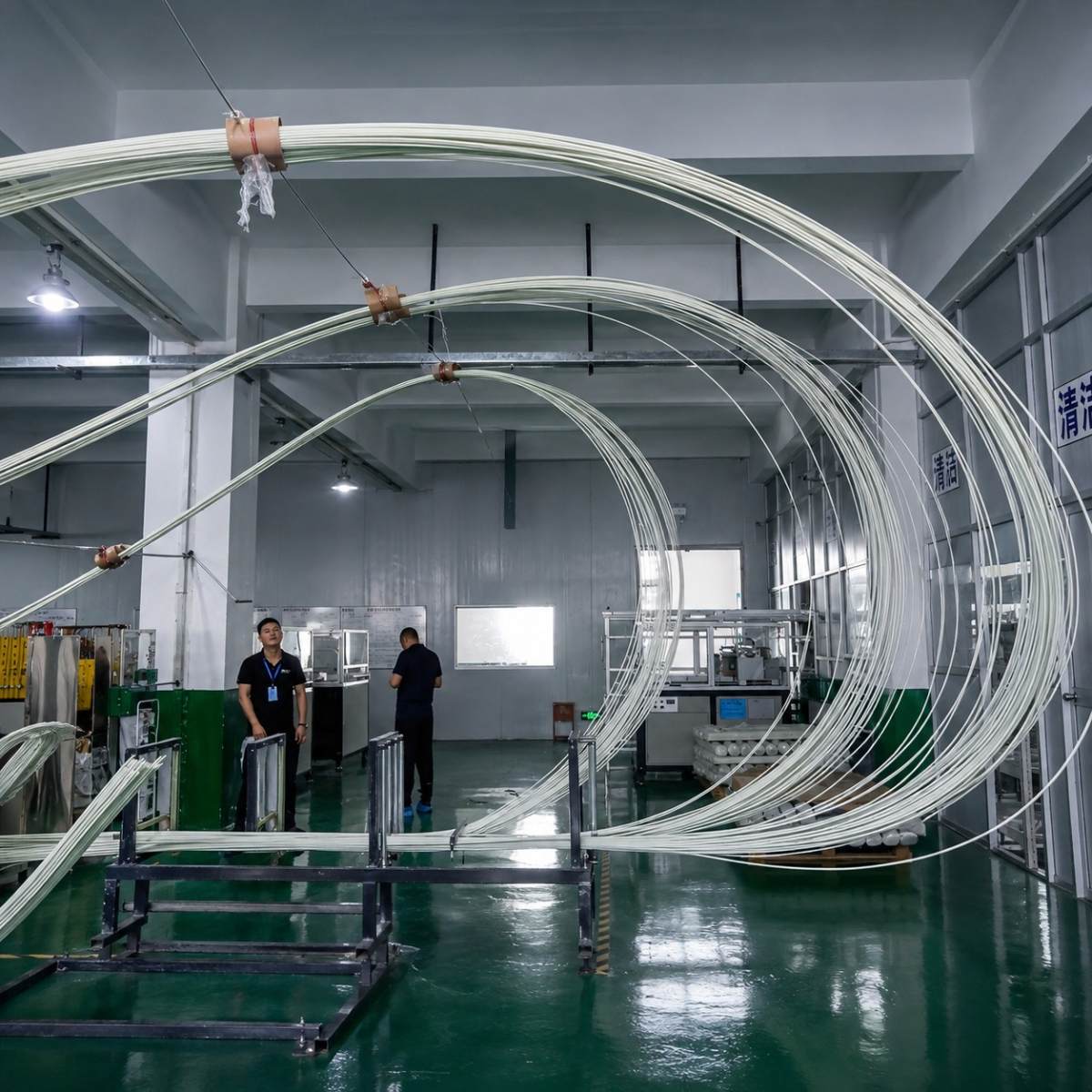
Flexible fiberglass profiles in Meibang's workshop. Flexibility and straightness are different design considerations.
Long fiberglass rods also need appropriate support during measurement. Their own weight may cause visible sagging, which can affect the result.
If your project has a straightness requirement, agree on the acceptable deviation, measurement length and inspection setup before production.
Otherwise, the buyer and supplier may inspect the same rod under different conditions and reach different conclusions.
3. Check the Surface, but Look Beyond Appearance
Surface inspection is one of the simplest ways to evaluate an incoming fiberglass rod shipment.
It can reveal visible damage or manufacturing irregularities, but not every mark has the same significance.
A small color difference may be acceptable for a rod hidden inside industrial equipment. The same variation could be a problem for a visible golf training stick.
Cracks and significant exposed-fiber areas deserve closer attention. They shouldn't automatically be treated as harmless cosmetic marks.
ASTM D4385-19 provides guidance for classifying visible defects in thermosetting reinforced plastic pultruded products. It can help buyers and suppliers establish appropriate visual acceptance criteria.
For custom orders, reference photos or an approved product sample are often useful. They give both sides something specific to compare against.
The important part is agreeing on what is acceptable before production starts.
4. What Happens During Pultrusion Matters
Fiberglass rod quality begins long before the finished product reaches the inspection table.
In a typical pultrusion process, continuous glass fiber reinforcement is impregnated with resin, shaped through a die and cured to form a constant-section profile.
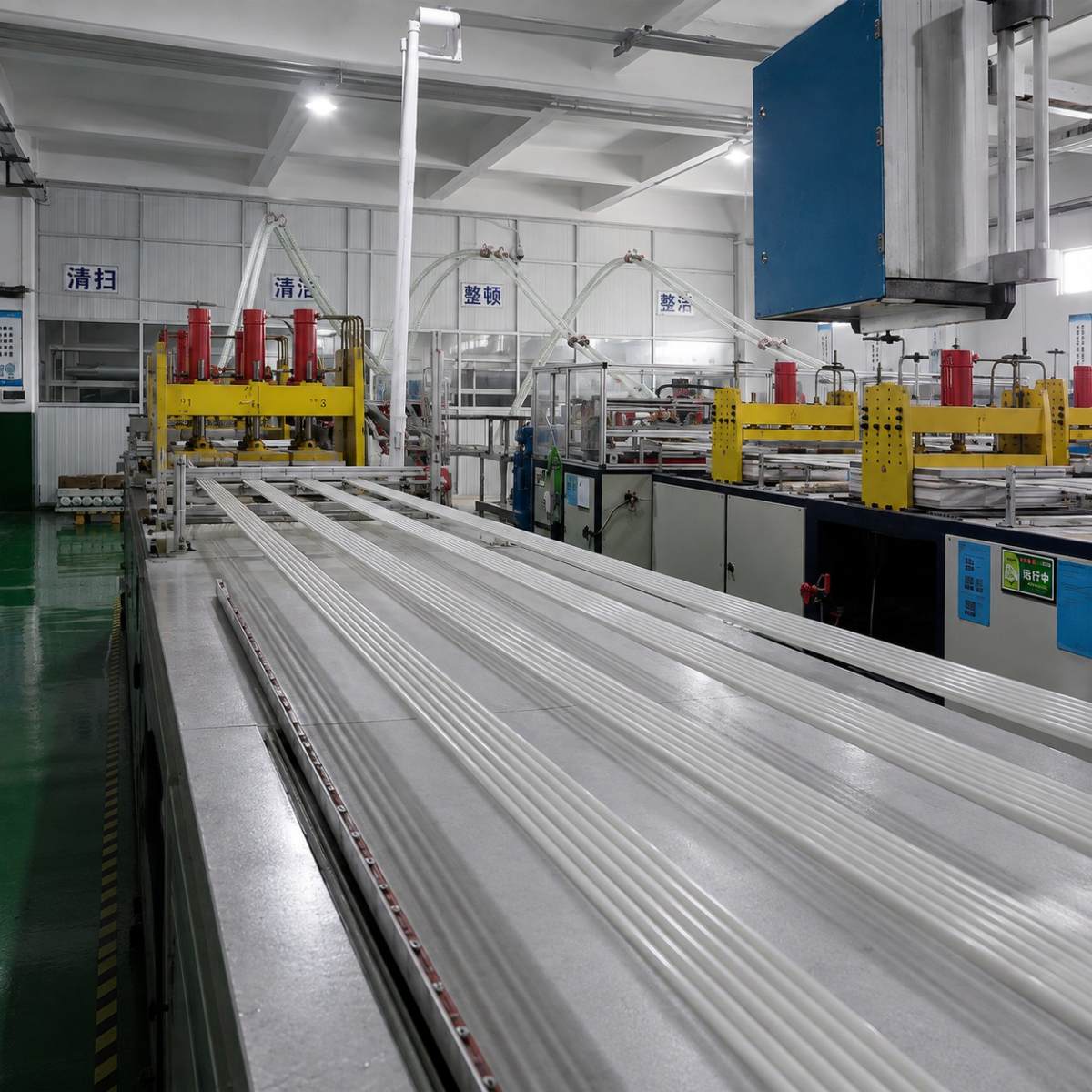
Actual fiberglass pultrusion production at Meibang, Dongguan, China.
The process may look straightforward, but the finished rod depends on several factors working together: fiber arrangement, resin impregnation, curing conditions and consistent production control.
Inadequate impregnation, internal voids or insufficient cure may not always be visible from the outside.
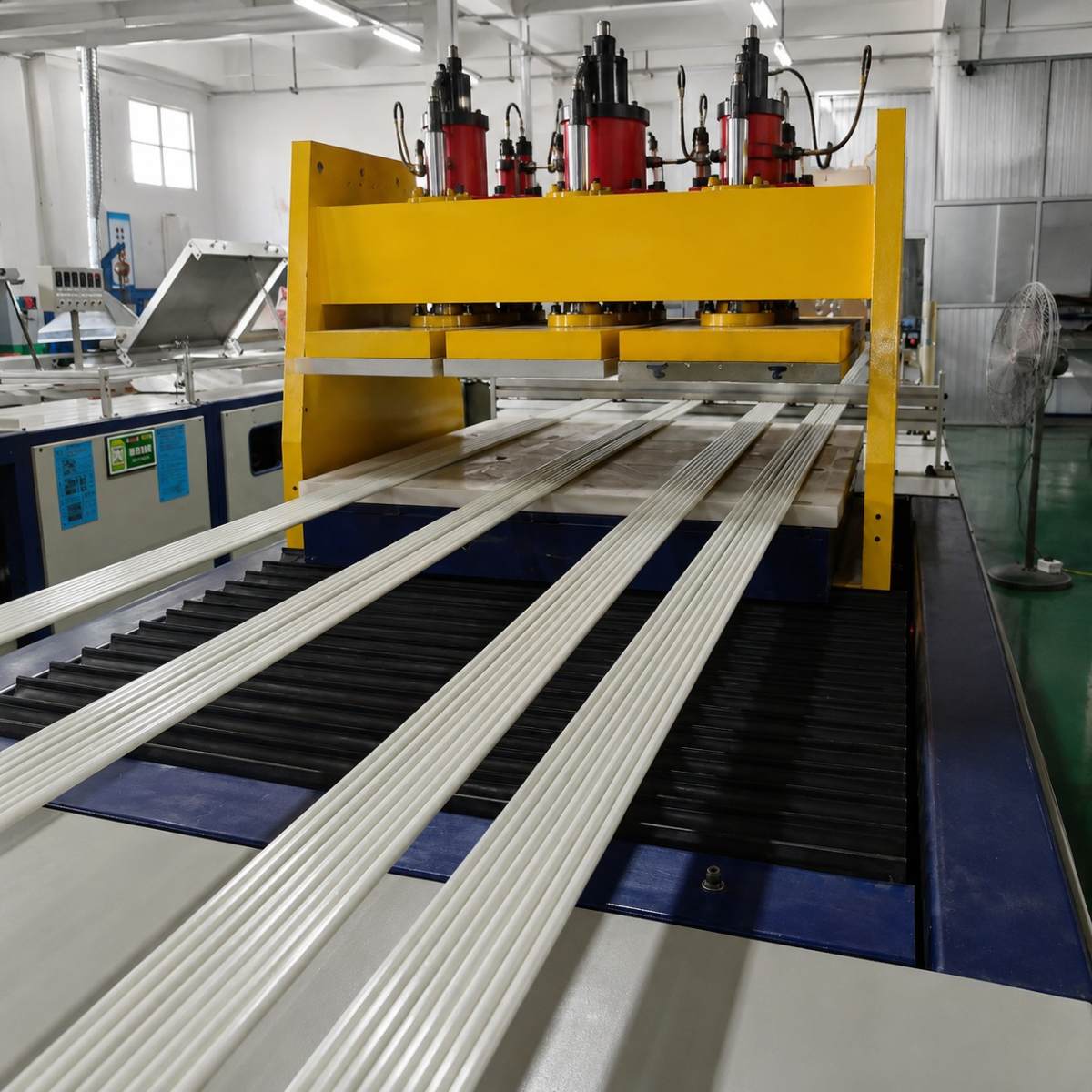
Fiberglass production equipment inside Meibang's workshop.
That's why a smooth surface alone cannot confirm the internal quality of a fiberglass rod.
For components with specific mechanical requirements, buyers may need supporting material data or appropriate test results.
The level of verification should match the application. A general-purpose training rod doesn't necessarily need the same testing as a component used under a defined structural load.
Surface hardness can sometimes provide useful process information for certain thermoset materials, but it should not be treated as proof of complete cure or overall mechanical performance.
If a property is critical to your design, specify it and discuss how it should be verified.
A Look Inside Meibang's Fiberglass Production Workshop
At Meibang, fiberglass products are manufactured using pultrusion equipment and continuous glass fiber reinforcement.
Our workshop photographs show the production lines, processing equipment and fiberglass materials used in manufacturing.
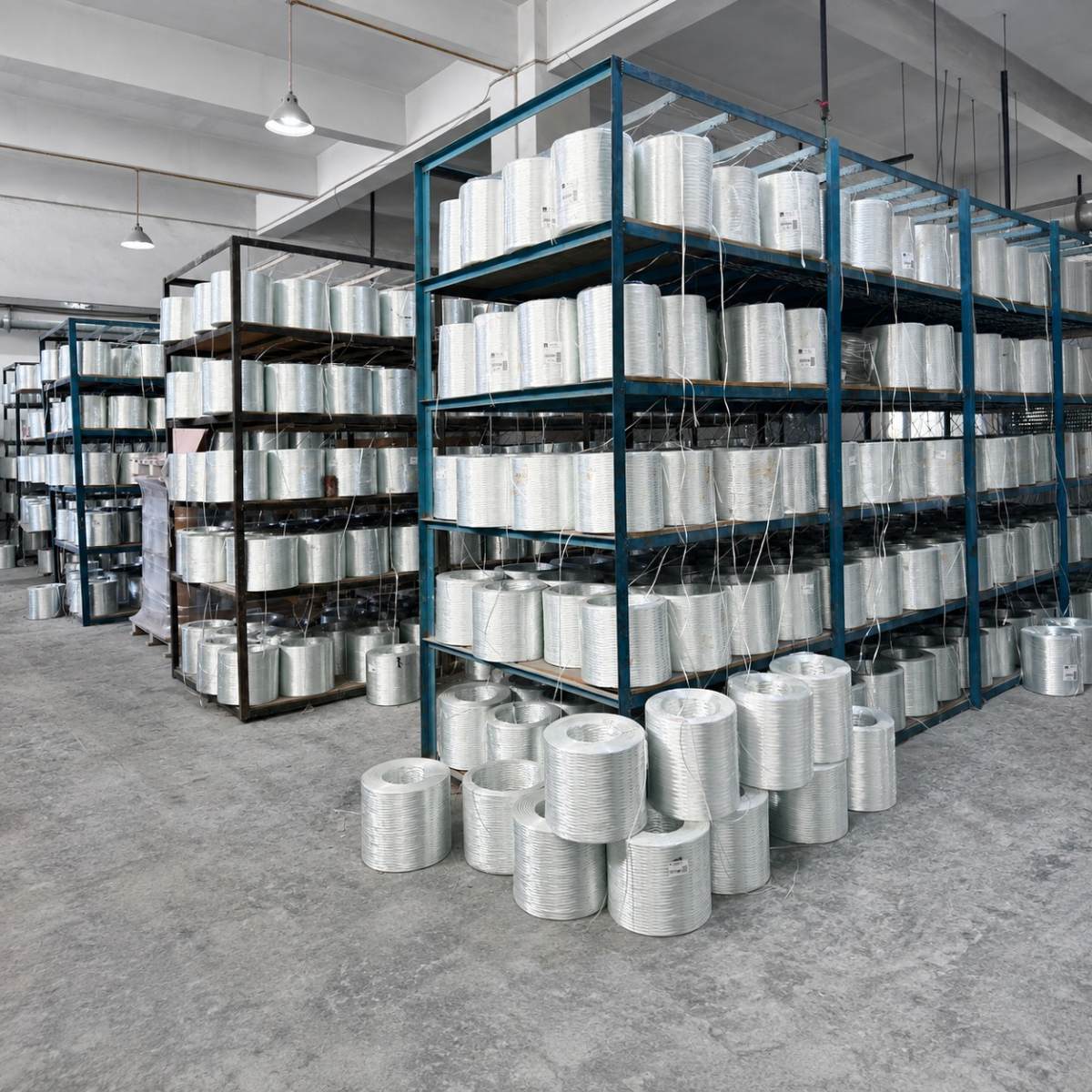
Continuous fiberglass roving materials stored at Meibang's factory.
They provide a view of the actual production environment, rather than only showing finished rods against a white background.
For buyers evaluating a new supplier, seeing the manufacturing process is useful. It helps establish where the products come from and gives a starting point for discussing production capabilities.
However, production photographs are not substitutes for dimensional inspection records or material test results. Those requirements need to be reviewed separately for each project.
5. A Good Sample Is Only the Beginning
An approved sample helps confirm that a design is workable. What matters next is whether production parts meet the same agreed requirements.
Imagine receiving a sample that fits perfectly into your assembly. You approve it and place a larger order.
When the shipment arrives, some rods are difficult to install because their diameters vary more than expected.
The material may still be fiberglass, and the rods may look similar, but the parts no longer fit your process consistently.
Before moving from samples to bulk production, clarify three things.
What exactly has been approved?
An approved sample may confirm appearance, construction or fit. Critical dimensions and functional requirements should also be recorded in an agreed drawing or specification.
How will the production batch be checked?
Identify the important characteristics and agree on the measurement methods, inspection frequency or sampling arrangements where required.
What happens if parts fall outside the specification?
Acceptance limits, reporting requirements and the procedure for handling nonconforming parts should be understood before the order is produced.
The goal isn't to make every rod look absolutely identical. It's to keep the characteristics that affect assembly, appearance and function within the agreed limits.
For repeat orders, this matters more than producing one unusually good sample.
6. Packaging Is Part of Delivery Quality
Long or slender fiberglass rods need suitable protection during handling and transportation.
Even a correctly manufactured rod can arrive with scratched surfaces, damaged ends or other handling damage if the packaging isn't appropriate for its dimensions and shipping conditions.
For export orders, buyers should confirm the expected packing method, especially when ordering long rods or products with finished surfaces.
Depending on the product, protection may involve suitable bundling, separation, end protection or supporting packaging.
Packaging should be considered as part of the purchasing specification, not something discussed only after production is complete.
7. Different Applications Need Different Quality Checks
A fiberglass rod used for sports equipment doesn't necessarily need the same properties as one used in an industrial assembly.
The intended application should determine which characteristics receive the most attention.
Sports and Training Equipment
For golf alignment sticks, volleyball antennae and similar products, buyers may focus on:
- Straightness and controlled bending behavior
- Surface finish and color
- Cut length and overall appearance
- Fit and assembly of connecting components
For detachable products, sleeves, joints and internal connecting cords should also be considered.
Industrial Rods and Supports
Industrial applications may place greater emphasis on dimensions, alignment, connection design and mechanical performance.
A rod used in a support structure may need to withstand specified loads or remain within an allowable deflection.
These requirements should be defined before material selection and manufacturing details are finalized.
Electrical Components
Fiberglass-reinforced polymers are commonly considered where electrical insulation is required.
However, the fiberglass material name does not guarantee a particular dielectric strength or insulation rating.
If electrical performance is critical, the buyer should provide the applicable requirements and agree on suitable verification methods.
The right quality checklist depends on the job the rod is expected to perform.
Related products:Explorefiberglass rod productsfor industrial, sports and custom OEM applications.
8. What Information Should You Send With Your RFQ?
You don't need a lengthy technical document for every fiberglass rod order.
But a few clear details can prevent a great deal of confusion later.
If you already have a working sample, it can be helpful to send it along with the drawing.
The sample shows what the finished part looks and feels like. The drawing defines which dimensions and requirements need to be controlled.
Together, they provide a clearer reference for a custom manufacturing project.
9. How Meibang Reviews Custom Fiberglass Rod Projects
Meibang manufactures pultruded fiberglass rods and other composite products for OEM customers.
For a new project, we start by reviewing the intended application, rod dimensions, required quantity and any critical details shown on the drawing.
If the product requires cutting, drilling, chamfering or additional fittings, those details should be considered early. A connection that looks simple on a drawing may affect how the rod needs to be manufactured or machined.
Where sampling is needed, the sample should be evaluated against the agreed requirements before bulk production.
For projects with specific dimensional or functional needs, manufacturing feasibility and appropriate inspection arrangements should be confirmed as part of that review.
Customers don't always have a complete technical drawing at the beginning. An existing sample, reference photo or description of the application can still help start the discussion.
The aim is to identify potential fitting or production issues before they become problems with a finished shipment.
Explore Meibang's Custom Fiberglass Rods
See our pultruded fiberglass rod products and the options available for custom diameters, lengths, colors and secondary machining.
Frequently Asked Questions
What are the most common quality problems in pultruded fiberglass rods?
Potential issues include diameter variation, unacceptable straightness, exposed fibers, surface cracking, blisters and voids. Their importance depends on the product's application and the agreed acceptance criteria.
How do I check the diameter of a fiberglass rod?
Use a suitable calibrated measuring instrument and check the rod at agreed positions. Where roundness matters, take measurements in more than one direction around the cross-section.
Does a smooth surface mean a fiberglass rod is good quality?
Not necessarily. A smooth surface can indicate a good visual finish, but it doesn't confirm internal quality, adequate resin cure or mechanical performance.
Are fiberglass rod tolerances the same for every size?
No. Tolerances depend on the profile, dimensions, manufacturing method and project requirements. Standard pultruded profiles and custom parts may have different specifications.
Is an approved sample enough to control bulk production quality?
An approved sample is a useful reference, but critical dimensions, functional requirements and acceptance criteria should also be documented where necessary.
Can pultruded fiberglass rods be cut or drilled?
Yes, where the design permits. Secondary machining can interrupt the reinforcement or affect local performance, so the required features should be reviewed with the rod's intended function and loading.
What should I check before ordering fiberglass rods from a new supplier?
Start with the supplier's relevant manufacturing capabilities, product samples, dimensional requirements and agreed acceptance criteria. For critical applications, discuss the inspection evidence or test documentation needed before placing the order.
Need Custom Pultruded Fiberglass Rods?
Working on a fiberglass rod project but unsure about the required dimensions, tolerances or connection details?
Send Meibang your drawing, an existing sample or a reference photo, together with the application and expected quantity.
We can review the proposed manufacturing approach, machining requirements and key specifications before sampling.
Email:meibangfrp@163.com
Factory: Building A, Guanghui High-Tech Industrial Park, No. 18 Longjiang Road, Xiekeng, Qingxi Town, Dongguan, Guangdong, China
Navigation
Send Us A Message
Get in touch with us
Phone