

NEWS CENTER
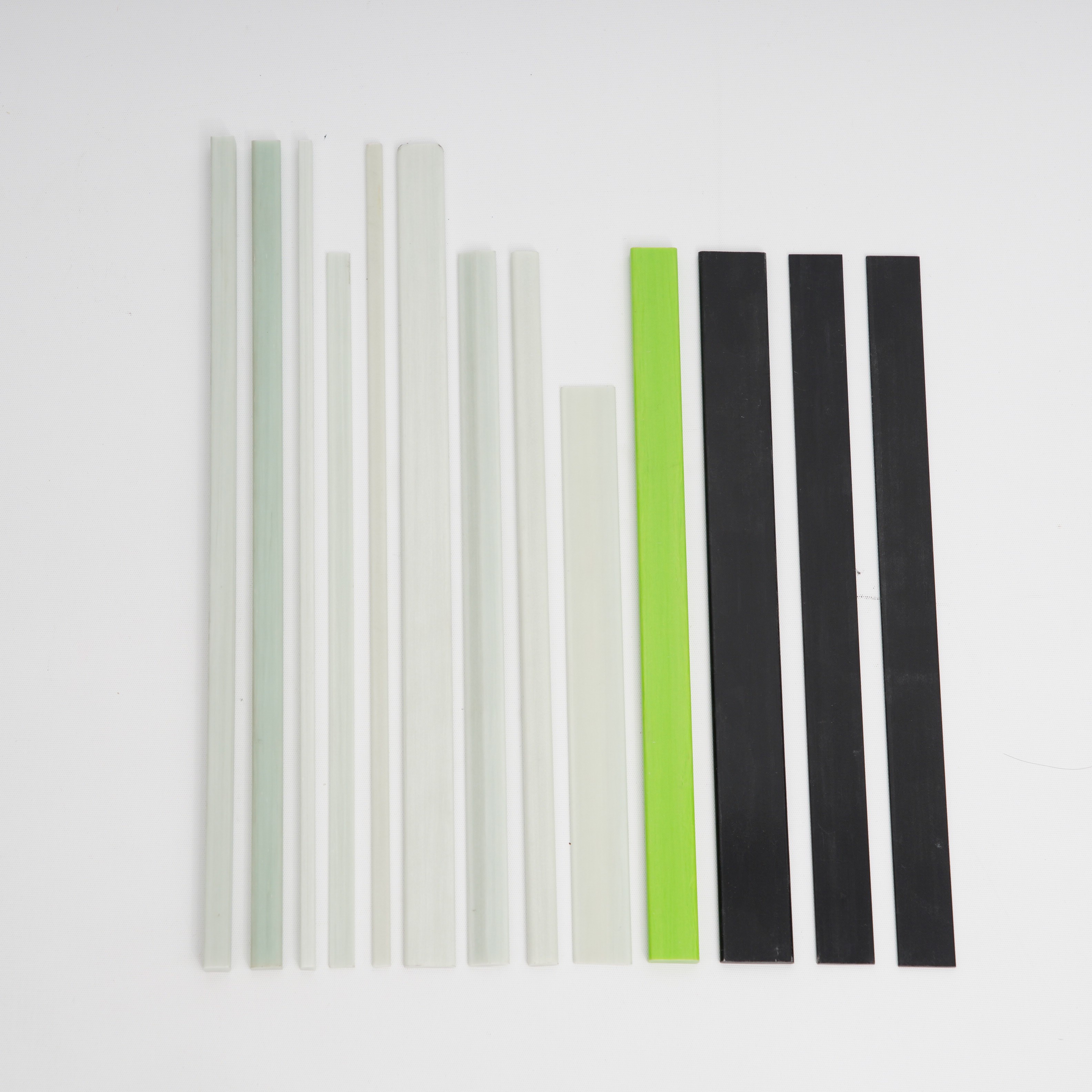
Fiberglass Rods Are Cured, Not Melted
A pultruded fiberglass rod is made from continuous glass fiber reinforcement and a polymer resin matrix.
During pultrusion, fiberglass rovings are impregnated with resin, formed and continuously pulled through a heated die.
For conventional thermoset FRP rods, the heat causes the resin to cure and lock the glass fibers into the final shape.
The glass fibers themselves are not melted.
So the important question is not the melting temperature of fiberglass. What matters is whether the resin reaches the required degree of cure before the rod leaves the die.
Typical Fiberglass Rod Pultrusion Temperatures
Based on our production experience, the following ranges can be used as practical references:
For relatively small-diameter solid fiberglass rods, we often work around 120–150°C when using an appropriate polyester resin system.
The actual setting still needs to be adjusted for each product.
Why Does the Temperature Change?
Several factors affect the correct pultrusion temperature.
A small fiberglass rod heats differently from a larger solid rod. As the cross-section increases, it takes longer for heat to reach the center of the material.
Pulling speed also matters.
A faster pulling speed means the material spends less time inside the heated die. A slower speed increases the residence time.
This is why die temperature and pulling speed must be adjusted together.
The resin formulation is equally important. Two products may both use polyester or epoxy resin, but different curing systems, additives and formulations can require different processing conditions.
Why Are Different Temperature Zones Used?
In production, a pultrusion die is normally controlled in several heating zones rather than treated as one uniform temperature.
At the entrance, the resin-impregnated fiberglass needs to enter the tooling and form correctly. If the resin begins curing too early, production can become unstable.
Further into the die, more heat is used to drive the curing reaction.
Before the rod exits, the resin needs to reach sufficient cure so the finished profile can maintain its shape and dimensions.
In practice, we adjust the temperature profile together with:
- rod diameter
- pulling speed
- resin formulation
- curing system
- fiber content
- die geometry
This is one of the reasons pultrusion experience matters.
Why Can Similar Fiberglass Rods Have Different Quality?
Two fiberglass rods can use similar glass fiber and resin but still have different straightness, surface quality, dimensional stability or mechanical performance.
Raw materials are only part of the result.
Fiber alignment, resin impregnation, void content, pulling speed and curing control all affect the finished rod.
If the pulling speed is too high, the rod may leave the die before the resin has cured sufficiently.
If the temperature is too low, incomplete curing can occur.
If the entrance zone is too hot, the resin may begin reacting too early and make the process unstable.
This is why producing a consistent pultruded fiberglass rod requires more than choosing the right raw materials. The complete process needs to be controlled together.
From our production experience, this process control is one of the main reasons apparently similar fiberglass rods can perform differently from one supplier to another.
Pultrusion Temperature Is Not Service Temperature
This is an important distinction for buyers.
If a fiberglass rod is manufactured at 150°C, it does not mean the finished rod can continuously operate at 150°C.
Pultrusion temperature is used during manufacturing to cure the resin.
Service temperature refers to the temperature the finished rod can tolerate in its actual application.
The service temperature depends on the resin system, cure condition, mechanical load and operating environment.
If your application involves elevated temperatures, it is more useful to provide the manufacturer with:
- continuous operating temperature
- short-term peak temperature
- mechanical load
- operating environment
The appropriate resin system can then be selected according to the actual application.
What Temperature Should a Fiberglass Rod Be Pultruded At?
For many conventional thermoset FRP rods, 120–180°C is a useful general production reference.
Small-diameter polyester rods may often be produced closer to 120–150°C, while some epoxy systems may require higher temperatures.
But the correct setting always depends on the complete process:
Resin System + Rod Diameter + Pulling Speed + Die Design + Curing Behavior
For buyers, you normally do not need to specify the manufacturing temperature yourself.
What matters more is the performance required from the finished fiberglass rod.
What Should You Provide for a Custom Fiberglass Rod?
For a custom fiberglass rod project, provide:
- rod diameter
- finished length
- operating temperature
- mechanical requirements
- electrical requirements, if applicable
- operating environment
- quantity
- tolerance
- drawing or sample
With this information, we can evaluate the suitable material system, available tooling and production parameters before sampling or mass production.
Navigation
Send Us A Message
Get in touch with us
Phone