

NEWS CENTER
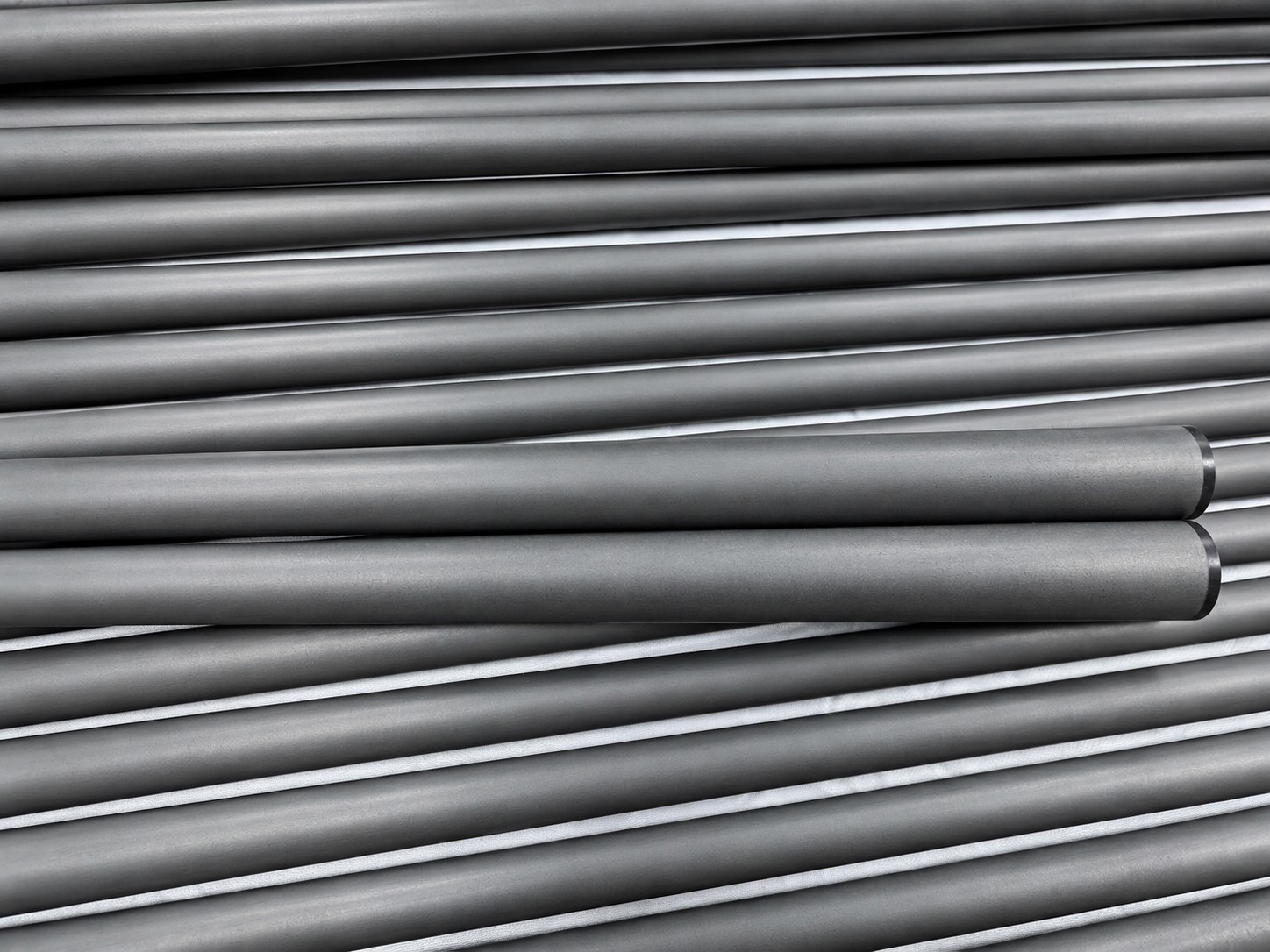
Why Does My Carbon Fiber Cue Shaft Have a Seam?
Noticed a visible line on your carbon fiber cue shaft? Here’s how to tell whether it’s normal and what to check before buying.
If you are buying a carbon fiber cue shaft for the first time, you may notice a thin line running along the shaft.
The first thought is often: Is this a crack?
Usually, not necessarily.
Carbon fiber cue shafts are composite products. During forming, curing and surface finishing, a faint longitudinal line may remain visible. A visible line alone does not mean the shaft is defective.
What matters is whether the surface and structure around that line are normal.
Is a Visible Seam Normal?
A faint seam can be acceptable when:
- the surface is smooth
- there is no raised edge
- there is no visible separation
- the shaft remains straight
- there is no local deformation
You should inspect the shaft more carefully if the line can be clearly felt with a fingernail, the surface begins to lift, or the area around it looks swollen or separated.
The easiest way to understand it is:
A visible line may be cosmetic. A real gap or separation is different.
So do not judge a carbon fiber shaft simply because you can see a line.
How to Check a Carbon Fiber Cue Shaft Before Buying
For a first-time buyer, four checks are enough.
1. Straightness
Roll the shaft slowly on a flat surface and watch the tip and joint area.
This is only a simple visual check, not a precision measurement, but obvious wobble should be investigated.
For OEM orders, straightness should be confirmed as an actual production specification.
2. Surface Finish
Run your hand lightly along the shaft.
The surface should feel smooth and consistent. Look for obvious rough areas, raised spots, exposed fibers or deformation.
Do not judge quality only by how attractive the carbon pattern looks.
A good-looking shaft can still have poor finishing or inconsistent dimensions.
3. Taper and Tip Diameter
Many new buyers only look at tip diameter.
That is not enough.
Two 12.5 mm shafts can feel very different if their taper profiles are different. Taper affects how the shaft moves through the bridge hand and changes the overall playing feel.
Common tip diameters include 11.8 mm, 12.4 mm, 12.5 mm, 12.9 mm and 13 mm.
There is no single best size. The right choice depends on the player's preference and cue design.
4. Joint Fit
Connect the shaft to the cue butt and check the fit.
The joint should tighten smoothly and sit firmly without obvious looseness or misalignment.
Common options include:
Radial, 3/8×10, 3/8×11, 3/8×14, 5/16×14, 5/16×18 and Uni-Loc.
The joint type itself does not decide quality.
Machining accuracy does.
What Really Makes a Good Carbon Fiber Cue Shaft?
A good shaft is not defined by one feature.
The main things to look at are:
Straightness · Surface Finish · Taper · Joint Fit
Internal design also matters, because different shafts may use hollow or foam-supported structures. These differences can affect stiffness, vibration and playing feel.
For OEM buyers, it is better to confirm the full specification rather than simply order a “12.5 mm carbon fiber shaft.”
Tip diameter, taper, joint, straightness and internal structure should all be confirmed before production.
Final Answer: Is the Seam a Problem?
Not by itself.
If the line is faint, smooth and the shaft is straight and stable, it may simply be a manufacturing or finishing mark.
If you see an actual gap, raised edge, separation or deformation, then it should be inspected more carefully.
For first-time buyers, remember one simple rule:
Do not judge a carbon fiber cue shaft only by its appearance. Check how straight, smooth and accurately made it is.
At Meibang, carbon fiber cue shafts can be customized with different tip diameters, taper designs, internal structures and joint options for OEM projects.
Need a custom carbon fiber cue shaft?
Send us your required tip diameter, joint type and taper for evaluation.
Navigation
Send Us A Message
Get in touch with us
Phone